





Straight Edge/Screeds
Aluminum Straight Edges and Screeds for Tile and Floor Prep
A tile job is only as flat as the floor under it. An aluminum straight edge lets you see all the humps and dips before mixing the first bag of thinset. A screed bar can correct them in a mortar bed or patch. This collection covers straight edges from 2 to 8 feet, aluminum screed levels at 2, 2.5, and 3 meters, a six-piece set, and a vibratory screed kit for slabs.
Straight Edges vs Screed Bars
A straight edge tool is a measuring instrument. You place it on a substrate and slide a shim in the space between it and the substrate to get the measurement.
A screed is a working tool. You drag it across wet mortar, sand-cement, or concrete to strike the material down to a specified depth.
A screed level deals with both. Built-in vials let you strike off a bed and confirm level in the same pass without switching tools on shower pans. Concrete crews often choose magnesium screed because it's lighter and releases fresh concrete easily. For tile prep, aluminum flexes less under the same load.
Choosing Length and Checking Floor Flatness
The ANSI A108.02 flatness tolerance is written over 10 feet, so a 10-foot straight edge gives you the truest read on a room. Our 3 m screed level measures 9.84 feet and covers that span.
An 8-foot straight edge is commonly used for residential floors. It fits in a van and still spans the broad dips a short edge rocks over. A 6-foot straight edge suits bathrooms, hallways and backsplash walls. Keep the 2- to 4-foot lengths for curbs, niches, and checking tiles for warp.
To check a floor:
-
Vacuum the substrate. A misplaced pebble disturbs the reading.
-
Lay the edge horizontally, vertically and diagonally.
-
Slide a 1/8" shim under the edge at the widest gap. If it flows freely, work the floor before installing large-format tile.
-
Use one color for high spots and another color for low spots.
Screeding Mortar Beds and Self-Leveller
If a sand-cement mortar bed is to be used, install two rails or screed guides to finished height and check them using the level. When you place the screed on the rails, pack the mortar between the rails and pull the screed towards the operator in a short, side-to-side sawing motion. Fill any hollows, then strike again. Then pull the rails, fill the channels, and float the surface.
Self-leveler behaves differently. Spread it with a gauge rake, then run a spiked roller through to release air. Always mark low spots and pin off depths on the straight edge. Check again once the material cures. Even a thin pour can leave shallow dips on an extremely pitched floor that may be out of tolerance.
Why Tile Setters Buy Their Straight Edges at Tool Academy
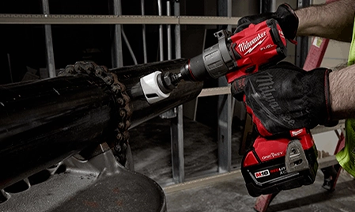
Tool Academy stocks professional tools, from trusted brands such as Tooltech, ASA Alloys and Milwaukee. Straight edges are available in a complete set of lengths, including an 8-foot edge for flooring and a 2-foot edge for trim work. For slab pours, the Milwaukee MX FUEL Vibratory Screed Kit runs on battery (no gas engine to pull start), produces no fumes (indoors), and is easy to use.
Frequently Asked Questions
What length straight edge do I need for checking a floor before tiling?
Most floors are made with a 10- or 12-foot edge, as the industry flatness standard is measured over 10 feet. Use a 6-foot edge for small bathrooms. Short edges miss broad, shallow dips.
How flat does a floor need to be for large-format tile?
ANSI A108.02 allows for 1/8" in 10 feet and 1/16" in 24", measured from the high points. If the tile is smaller, you can have 1/4" in 10 feet. Some porcelain panel manufacturers require tighter numbers, so please consult your tile's spec sheet.
Can I use a straight edge as a screed?
Yes, for a small mortar bed and patches, but you must clean it immediately. Heavy striking wears the edge, and dried mortar skews later readings. Many installers have one edge for checking and another bar for screeding.
What is the best way to prevent an aluminum straight edge from bending?
Keep it flat or hanging up on one end. Don't leave it against a wall, pry with it, or step on it. Test it by laying it on a flat surface, drawing a line along it, turning it over end for end, and drawing again. Any space between the two lines indicates a bend.