






Wet Tile Saws
Wet Tile Saws for Porcelain, Ceramic and Stone
Water is the key to a clean tile cut. Using a diamond blade on porcelain or granite generates heat quickly, and a wet tile saw removes it while clearing dust from the cut. The straight edges, fewer chips on the glaze, and longer-lasting blade are just some of the benefits you'll enjoy. The sizes that tile setters use: 7-inch tabletop saws are used for backsplashes and bathrooms, 10-inch floor saws on stands, and rail saws with 49 to 63 inches of cutting length for large-format slabs. Every wet saw in this collection is stocked with side tables, pumps, and blades to keep it running.
Handheld, Tabletop, and Masonry Wet Saws
Three styles of tile wet saw cover most work.
A handheld wet saw delivers water to a 4- or 5-inch diamond saw blade as you push it through the material. Apply it to notching around outlets, L-cuts at door jambs, and cutting existing tile. Plus, it's the most portable wet saw you can take up a ladder or into a tight powder room.
Tabletop saws feature a 7-inch blade that sits over a water tray and are powered by a 3.5 amp motor. They work with wall tile, mosaics, and 12x24 porcelain at a reasonable cost that makes sense for a single renovation.
Masonry and rail saws are the production machines. The motor head rides a rail above the tile; the tile stays stationary, and the blade moves. Rail saws in this collection are as large as 49, 51, and 63 inches, and the heaviest models roll on wheels. This style runs in a straight line over the full length, which is perfect for who cut 24x48 or 48x48 all day.
Blade Size, Rip Capacity, and Motor Power
Start with the largest tile on the job and work backward.
The depth the blade cuts is determined by the blade size. For wall and floor tile, a 7" blade will cut about 1-1/4"-1-1/2". A blade that's 10" tall can get to about 3" tall, making it suitable for pavers, thick stone, and stacked pieces.
The longest movement that the saw can perform in a single pass without going out of square is its rip capacity. A small saw (10") on a stand cuts about 24" per turn. High-capacity models rip 36. Calculate the length of the tile's long side and the diagonal cut you intend to make. A corner-to-corner cut on a 24x24 tile requires about 34 inches.
How the saw works in dense materials depends on the motor power. For ceramic, a 3.5 amp motor is fine. For porcelain and granite, you need a 1.5 to 2 HP motor with a 15-amp rating that doesn't bog down during use. The edge chips when the motor slows down. Looking for a wet saw for porcelain tile? Put motor power ahead of price.
Wet Saw or Manual Tile Cutter: When You Need Water
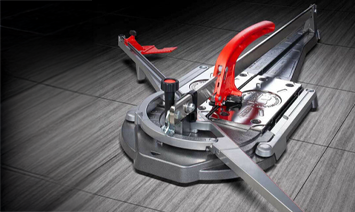
A manual snap cutter scores and breaks tile with no power and no mess. It's quicker than any saw for straight cuts in ceramic and thin porcelain. It is not suitable for cutting natural stone thicker than 10 mm, slivers less than 1/2 inch, or notches, and is not very good at cutting porcelain.
Use a wet saw for 45-degree miters at outside corners, granite, marble, or slate cuts, L-shaped notches, and clean edges on rectified porcelain, which will remain visible. Most professional setters have both on site. The snap cutter takes the straight runs. The saw does the rest.
Explore The Biggest Wet Saw Collection at Tool Academy
Since 1989, Tool Academy has supplied tile setters with professional tiling tools they can rely on every day. Our extensive collection includes big names like Battipav, Rubi, DeWalt, Husqvarna, and Toolway Industries. We also offer 115V pump replacement units, rail saw side tables, and porcelain and granite blades. Let us know what job you're doing and your tile size, and we'll match you with the right saw.
Frequently Asked Questions
What size wet saw do I need for 24x48 porcelain tile?
A full-length cut requires 50 inches or more of cutting length, so consider rail saws between 51 and 63 inches long. The diagonal measures about 54 inches and can only be cut by a 63-inch saw. You can only cross-cut the 24" side with a 36" rip saw.
Is a handheld wet saw as accurate as a tabletop saw?
Not for long straight cuts. A handheld saw is freehand and is floating on a 24” run, while a tabletop or rail saw is holding the line. It moves closer with the clamped guide rail. Its power matches cuts a table saw can't make, such as notches in installed tile.
Can a wet tile saw cut granite or natural stone?
Yes, using the appropriate blade and motor. Feed slowly on a 15-amp, 10-inch saw with a continuous rim diamond blade rated for granite. Any stone thicker than about 1-1/4” requires a 10” blade for depth.
How often should I change the water in a wet saw?
Replace it when it gets thick and gray (usually after 2-4 hours of continuous porcelain cutting) and at the end of the day. Slurry can reduce cutting speed as it covers the blade and can lead to chipping due to pump wear. Rinse the tray before you refill.
Can I put any 7” ot 10” blade on my wet saw?
No. The diameter must match the saw, the arbor hole must fit the shaft (5/8” is the standard size, but some 10” saws have larger arbor holes), and the blade's maximum RPM must be higher than the saw's. Use wet cutting blades.
Do I need a stand for a 10-inch wet tile saw?
For most jobs, yes. A 10" saw weighs 60 lbs or more, and throws water. A stand elevates the table to waist height, keeps it level, and supports long tile flat on the bed. You can use a solid level work table if you have one.