





Angle Grinders
Angle Grinders for Cutting & Grinding
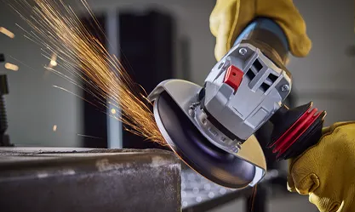
One of the most useful tools on any job site is the angle grinder. It will be the first tool you reach for when you need to cut metal studs, notch rebar, grind welds flush, strip paint, or clean up concrete edges before a pour. Most contractors keep an angle grinder on hand at all times, as it can be used with different discs to perform a variety of tasks. Such a tool can replace a saw, a sander, and a polisher.
Key Features and Applications
Before purchasing, know what the tiling tool needs to do for you. RPM is a measure of the speed at which the disc rotates, which in turn affects the aggressiveness of the cutting or grinding action. A grinder that operates at 11,000 RPM can remove material quickly, making it ideal for metal fabrication and heavy demolition tasks.
Lower RPM models provide greater control for stone or tile finishing. If you're operating overhead or in confined areas, search for a paddle switch that will automatically disengage when you let go of the paddle. For extended grinding sessions, when you need to rest your hand, a slide switch with lock-on is a game-changer. The blaring technology brings the disc to a halt within seconds of being released, reducing the risk of accidental contact after the trigger is pulled.
Types of Grinder Discs
The disc makes the tool. Cutting discs are thin and designed to cut metal, rebar, or masonry straight across. Grinding discs are thicker and used to remove material from a surface. They can be used to smooth welds or knock down rough edges. Flap discs combine cutting and finishing, which can be helpful for shaping metal prior to the final cut.
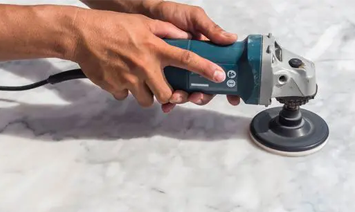
Diamond blades are used for tile, stone, and concrete, and if you're cutting porcelain, you'll need a wet-capable model to prevent cracking. Wire wheels remove rust and paint without damaging the underlying metal. Electric angle grinders can also polish. Replace the foam or wool pad with a compound pad, lower the RPM, and you'll be able to use the same tool you used to cut with to bring stone, metal, or concrete to a mirror finish.
How to Choose the Right Angle Grinder Tool
Grinder size refers to the disc diameter the tool accepts, usually 4-1/2", 5", 6", or 7". Use a 4-1/2" grinder for most metalwork and tile jobs. Increase to 6" or 7" for larger surfaces and for concrete grinding jobs that require more torque.
Corded angle grinder models provide unlimited run time and consistent power - important on long grinding jobs in a shop. Cordless grinders allow you to operate on job sites where outlets are not within easy reach.
When shopping for angle grinders for sale, consider also eye protection and gloves. Keep the guard in place and never grind towards yourself. Prior to installation, inspect the disc for cracks, as a damaged disc may break under load. After dusty tasks, clean the vents and, on corded models, replace the carbon brushes before they become worn to the point of losing power or damaging the motor.
Shop Angle Grinders at Tool Academy
Since 1989, Tool Academy has supplied contractors and tradespeople worldwide with professional tools for tough work. Shop trusted brands like Milwaukee, Makita, DeWalt, Metabo, and Bosch. From a compact 4-1/2" grinder for tile work to a 7" cordless tool for concrete preparation, we can help you find the right grinder for your work.