





Carbide Drill Bits
Carbide Drill Bits for Glass, Ceramic, and Tile
A standard twist bit skims across glazed tile and dulls before it breaks the surface. In a carbide drill bit, the ground tungsten carbide tip sits directly at the drill point. This tip lasts longer than steel on fired ceramic and glass and can be used to install a towel bar, hang a mirror, or even cut into an outlet box without chipping the face.
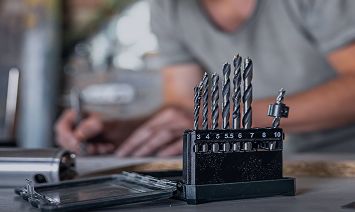
This collection includes spear-point glass and tile pieces ranging from 1/8" to 1" in size, V-groove tip pieces in 3", 4" and 6" lengths, and 4-piece and 8-piece sets. Every glass and tile drill bit here grinds its way through brittle material instead of cutting into it. Use a light touch and the tip will do the rest.
Carbide or Diamond: Matching the Bit to Your Tile
Carbide handles glazed ceramic wall and floor tile, glass, mirror, and terracotta well. A carbide drill bit for tile can drill through most of the ceramic at high speeds in less than a minute.
Porcelain is harder. It is fired at a higher temperature and contains less than 0.5% water by weight, which makes the body much denser. A carbide-tipped drill bit creates a few small holes in porcelain, but it gets hot and wears out quickly. Use a diamond core bit for more than 2 or 3 holes, or wider than 1/4". The same goes for granite, quartz, and most natural stone.
Not sure what you’re drilling? Check the box. In most cases, you can identify porcelain by how much water it absorbs. If the tile is heavier and the color runs all the way through, treat it as porcelain.
Choosing Bit Size, Length, and Sets
Pick the diameter from the anchor package, not the screw. Most plastic bathroom mounting holes for hardware anchors are 3/16" or 1/4". For pipe penetrations, go larger than the pipe: a 1/2" copper supply line measures 5/8" on the outside, so a 3/4" or 7/8" bit will leave space, and the escutcheon covers the gap.
The length is proportional to the depth. A 3" or 4" ceramic tile drill bit gets through the tile and a thin layer of mortar. If you must cut through the tile, then through the backer board, drywall, or block to set an anchor, reach for a 6" bit. V-groove tip bits bite into glaze and won't slide on slick wall tile.
Buy a set of bits if you'll be drilling them weekly. In one case, you get the common sizes, and the cost per bit is typically lower than buying singles.
How to Drill Tile and Glass Without Cracking
The most common causes of cracked tiles are excessive speed, too much pressure, or using a hammer drill. Here is the routine to follow while drilling tile:
-
Turn off hammer mode. Use the drill in a rotary-only mode.
-
Mark and tape. Place an "X" of painter's tape on the area. The tape keeps the tip from walking.
-
Go slow. Stay under 500 RPM for bits up to 1/4". Decrease the speed as the diameter increases.
-
Let the bit work. Apply gentle pressure evenly. If you notice smoke or the glaze browning, turn off the fire and let the glaze cool.
-
Keep glass wet. A few drops of water at the tip, or a water-filled putty ring, will keep the edge cool.
-
Be careful on breakthrough. Most chips on the reverse side occur in the final shot.
One caution: Do not drill tempered glass. It shatters on contact. Before beginning any glass drill bit job, check for a small etched stamp in one of the corners.
Carbide Bits Stocked by People Who Know the Trade
Since 1989, Tool Academy has supplied tile setters, plumbers, and contractors with professional tiling tools to keep jobs running smoothly. We stock bits from big names, including Relton, Bosch, Milwaukee, Tooltech and others. If you need any help in choosing the right bit for your job, feel free to reach out to our team.
Frequently Asked Questions
Can a carbide drill bit go through porcelain tile?
Yes, for a few small holes. Use a diamond core bit for repeated holes or holes larger than 1/4".
At what speed should I use a glass and tile drill bit?
Run smaller bits at less than 500 RPM and larger bits at slower speeds. High speed causes the tip to overheat and to crack glass.
Can I use hammer mode with a carbide tile bit?
No. Hammer action will break glass and crack tile. Only use rotary mode. Limit hammer mode use to masonry work only, and use a masonry bit.
Why does my bit slide around on glazed tile?
The glaze has no grip since it is smooth and hard. Cover with painter's tape, start at low speed, and apply light pressure until the tip seats.
Do I need water when drilling glass?
Yes. Water keeps the carbide tip and the glass cool. This eliminates heat cracks. A few drops at the contact point, renewed as you drill, are enough.