





Variable Speed Grinders
Variable Speed Angle Grinders for Stone, Tile, and Metal
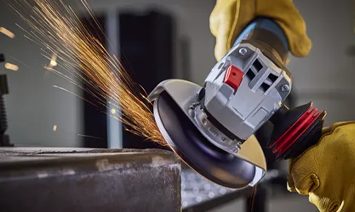
With a fixed-speed grinder, RPMs accelerate to 10,000 or higher the moment you pull the trigger. That suits a cut-off wheel in steel. A variable-speed grinder allows you to reduce speed down below 3,000 RPM for polishing and increase speed back up for cutting - all in one grinder.
All of these variable-speed angle grinders feature a speed dial, and most have constant-speed electronics that maintain RPM when you lean into the cut. Standard features include soft start, overload protection, and anti-kickback clutch or electric brake.
Matching Grinder Speed to the Job
Your accessory and material determine the speed. These are the initial ranges to consider; then refer to the max RPM printed on the disc/pad:
-
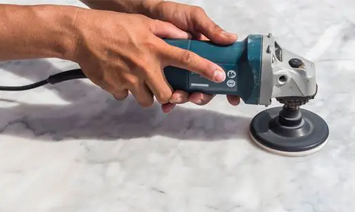
Wet polishing granite: 2,000 - 3,500 RPM, lower for the final grits
-
Grinding stone edges with a diamond cup wheel: mid-range
-
Wire brushing rust or paint: low to mid, so the wires don’t shed
-
Cutting steel, rebar or tile: top of the dial
If the cutting speed is too low, the disc edge will drag and chip. If it's too rapid, pads will overheat.
Corded, Cordless, and Compact Variable Speed Grinders
Corded 5” models are the shop standard for stone. With 12 to 13.5-amp motors that can run continuously, they reach up to 2,800 RPM.
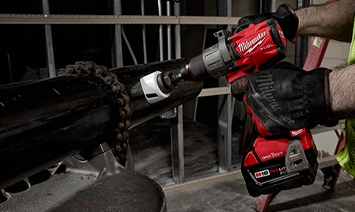
Instead of a cord, use a cordless variable-speed grinder on scaffolds, roofs, and anywhere a cord is a hassle. These 18V and 40V brushless motors deliver 3,000 to 8,500 RPM and stop the wheel in seconds.
Compact, long-neck grinders reach weld seams inside a frame, carving details, and tight stone corners that a 5” tool can’t touch. For clean 45° cuts, a 45° grinder bracket and a tile mitering guide are also available.
Your Trusted Grinder Supplier: Stocked for the Trades Since 1989
Tool Academy stocks professional tools perfect for stone shops, tile jobs, and fabrication bays. Corded 5" models with low-speed floors for polishing, brushless cordless grinders with electric brakes for site work, and compact models for detail work that a full-size grinder can't reach. The lineup includes Makita, Metabo, Milwaukee, Proxxon, Arbortech, and Battipav.
Frequently Asked Questions
Do I need a variable speed grinder for polishing granite?
Yes. Most resin diamond pads are rated at approximately 2,000-4,000 RPM. The pad glazes at 10,000 RPM and causes dark burn marks on the stone.
What RPM should I use with diamond polishing pads?
Run coarse grits at 2,500 to 3,000 RPM and drop close to 2,000 for 3000 grit and the buff pad. Don't exceed the number indicated on the pad.
Is it possible to cut tile on a variable speed grinding tool?
Yes. Attach a 4-1/2" or 5" diamond tile blade and operate at close to full speed. Use water or dust extraction, and keep the guard in place.
Paddle switch or slide switch: which is safer?
The paddle switch is the safer choice for cutting because it cuts power when you let go. During long polishing passes, a lock-on slide switch is easier on your hand.
Is a cordless variable speed grinder powerful enough for stone work?
Yes, for cutting, edge work, and site touch-ups. If it's a wet polishing job that requires a full day, a corded grinder that has a 2,800 RPM floor is still the better tool.